Your Independent Label, Up and Running
A complete path from identity and A&R to distribution, promotion, royalties and catalogue growth.
A practical blueprint for independent labels
Define an identity, find artists, organise releases, promote music and turn isolated records into a sustainable catalogue.
Manual + toolkit + editable agreements
One-off payment · Immediate access
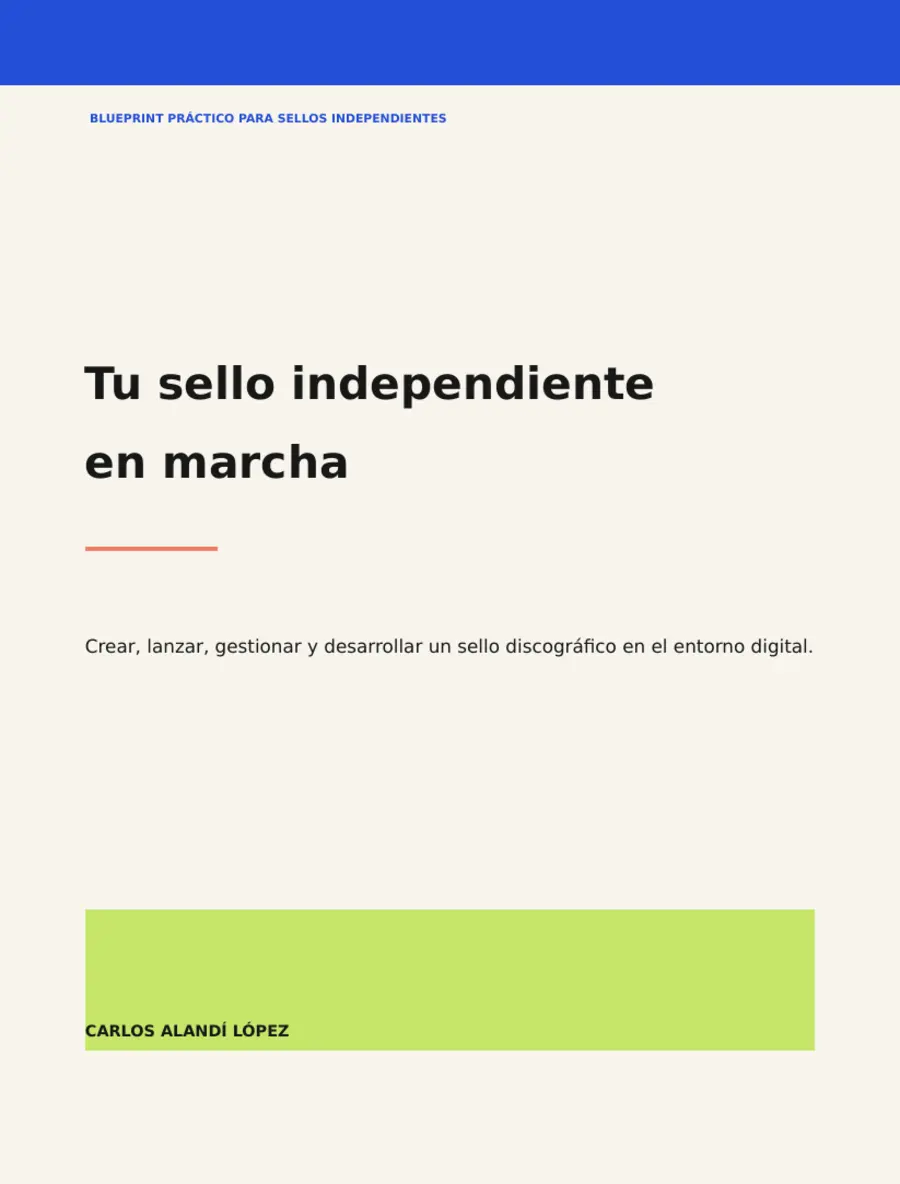
Real-world experience turned into a system you can use.
Why this manual exists
Uploading a track through a distributor is within almost anyone's reach. The difficult work starts afterwards: choosing the right music, agreeing clear terms, maintaining a schedule, looking after artists, controlling costs and making each release contribute to something bigger.
I learnt this by releasing hundreds of records, making good decisions, making mistakes, and watching some tracks disappear while others found millions of listeners. This product brings those lessons together so you do not have to start completely blind.
You have music or access to artists, but no system for turning it into a catalogue.
You improvise contracts, schedules, promotion and statements every time a release arrives.
The information you find is scattered, theoretical or built for operations far larger than yours.
You want to move forward without paying for eight tools before releasing anything.
The complete package
You are not simply getting a PDF. The manual explains the judgement behind the work, the toolkit turns it into editable processes, and the agreements help you document the label's essential relationships.
A complete path from identity and A&R to distribution, promotion, royalties and catalogue growth.
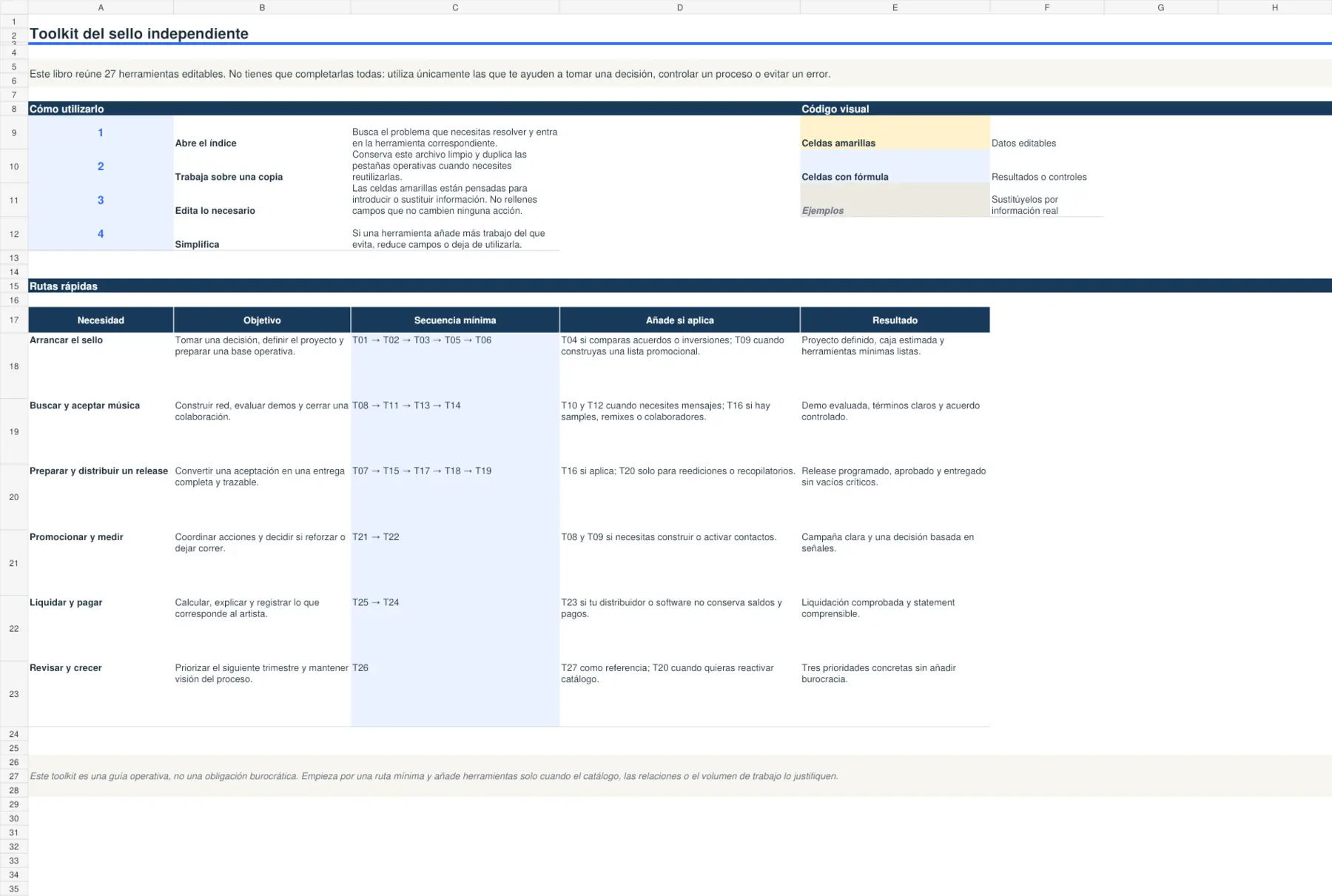
Budget, scouting, calendar, release checklist, contacts, promotion, statements and operational control in one spreadsheet.
Exclusive master licence, master buyout and free-download authorisation, supported by a practical guide.
What you will be able to do
You do not need to adopt every tool on day one. You need to know which decision comes next, what information it requires and how to stay in control as the catalogue grows.
Turn your taste and judgement into a sonic, visual and cultural direction that helps you decide what belongs.
Build a network, assess demos and approach realistic prospects instead of waiting for music to arrive.
Understand splits, advances, recoupable costs, licences, master buyouts and publishing through worked examples.
Coordinate contracts, mastering, artwork, metadata, distribution, pitching and assets without relying on memory.
Separate Spotify pitching, private curators, DJ promo, premieres, content and genuine traction signals.
Read net income, apply splits and recoupable costs correctly, and produce understandable artist statements.
Give music another opportunity through compilations, editorial content and reactivation campaigns.
Add tools, subscriptions and collaborators only when the volume of work justifies them.
A label is a system
The goal is not to get everything right on day one. It is to build an operation that can listen, decide, release, learn and begin again with better information.
Look inside
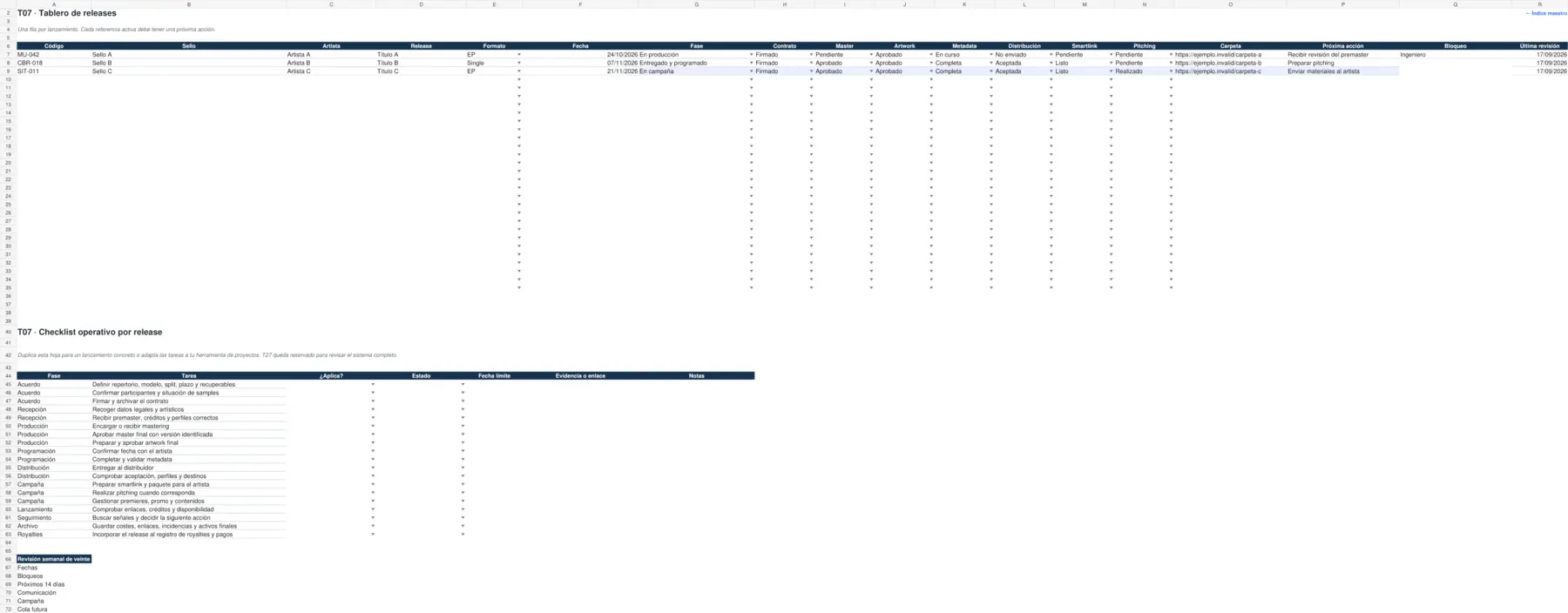
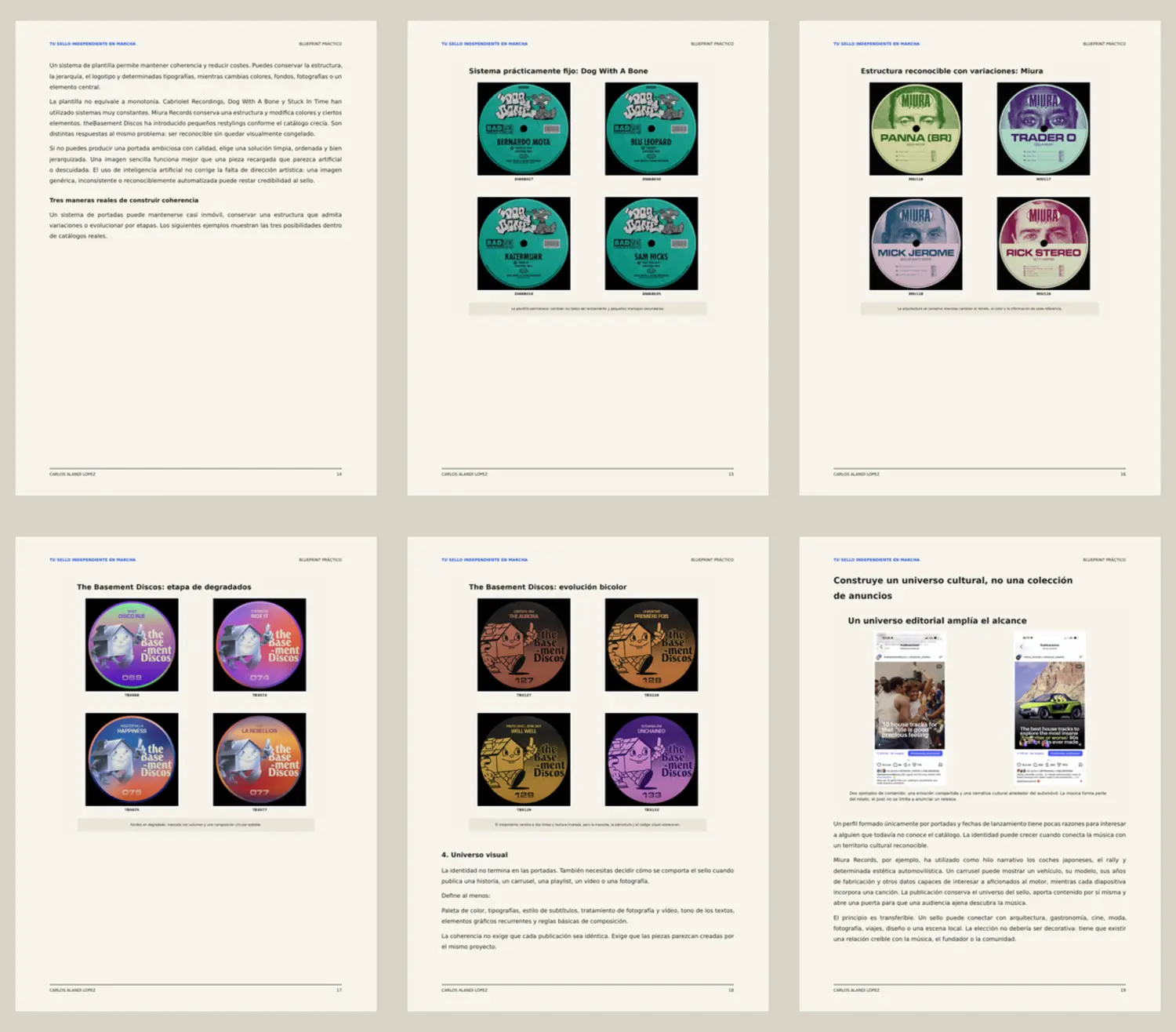
The material combines explanation, real cases, financial examples, visual systems and adaptable tools built around the work of running labels.
The journey
Fifteen chapters and a practical closing section organised around the decisions that actually appear when running a label.
Purpose, sound, naming, branding, costs, break-even and the first decisions.
Scouting, contacts, musical judgement, feedback, negotiation and collaborator fit.
Licences, splits, advances, recoupable costs, samples, publishing and master buyouts.
Premasters, metadata, ISRC, UPC, singles and EPs, pitching and operational scheduling.
Promotion, DJ support, traction, statements, cash flow, catalogue, tools, delegation and artist retention.


Before you buy
This is for people willing to listen, make decisions, build relationships and work patiently on a catalogue.
Complete access
You do not need everything to be perfect before the first release. You do need to understand what you are building, who you are working with and how to stay in control when the catalogue grows.
Frequently asked questions
If you still need help applying the material to your own situation, you will also be able to request an individual session.
No. Many cases and tools come from electronic music because that is where I have the most experience, but distribution, agreements, scheduling, cost control, promotion and artist relationships apply across genres. The manual flags practices that are especially specific to electronic music.
No. You can use it to make your first decisions before releasing anything. The exercises let you work with a real reference when you have one, or a reasonable working assumption while you build your network.
Not at all. The toolkit includes an index and minimum routes. Add a tool only when it helps you make a decision, control a process or avoid an error.
No. They are practical editable templates based on agreements used in real label activity. Adapt them to your operation and local law. For a high-value or unusual case where you need full legal certainty, you may wish to have the agreement checked professionally.
It is not included in the product price. During the six months after purchase, you may request up to two individual one-hour sessions at €20 each, subject to availability.
A downloadable package containing the welcome guide, manual, toolkit and editable agreements for the language you selected.
Every catalogue begins with a decision
Begin with judgement, learn while moving and give the project the time, work and care it needs to produce results.
Explore the complete package